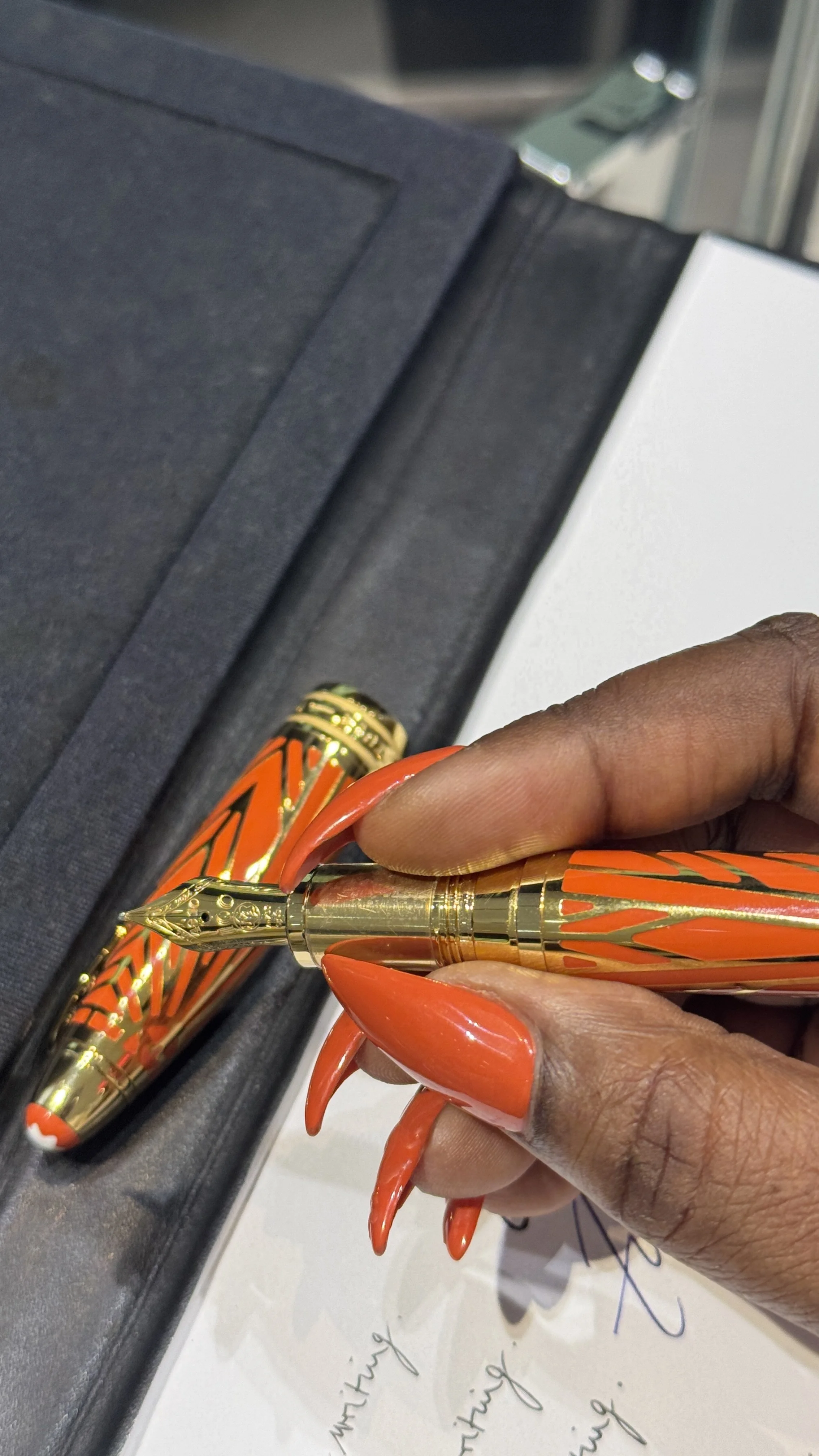
A Beginner's Guide to Timepieces. (from a novice)
The Correspondence — Post No. 06
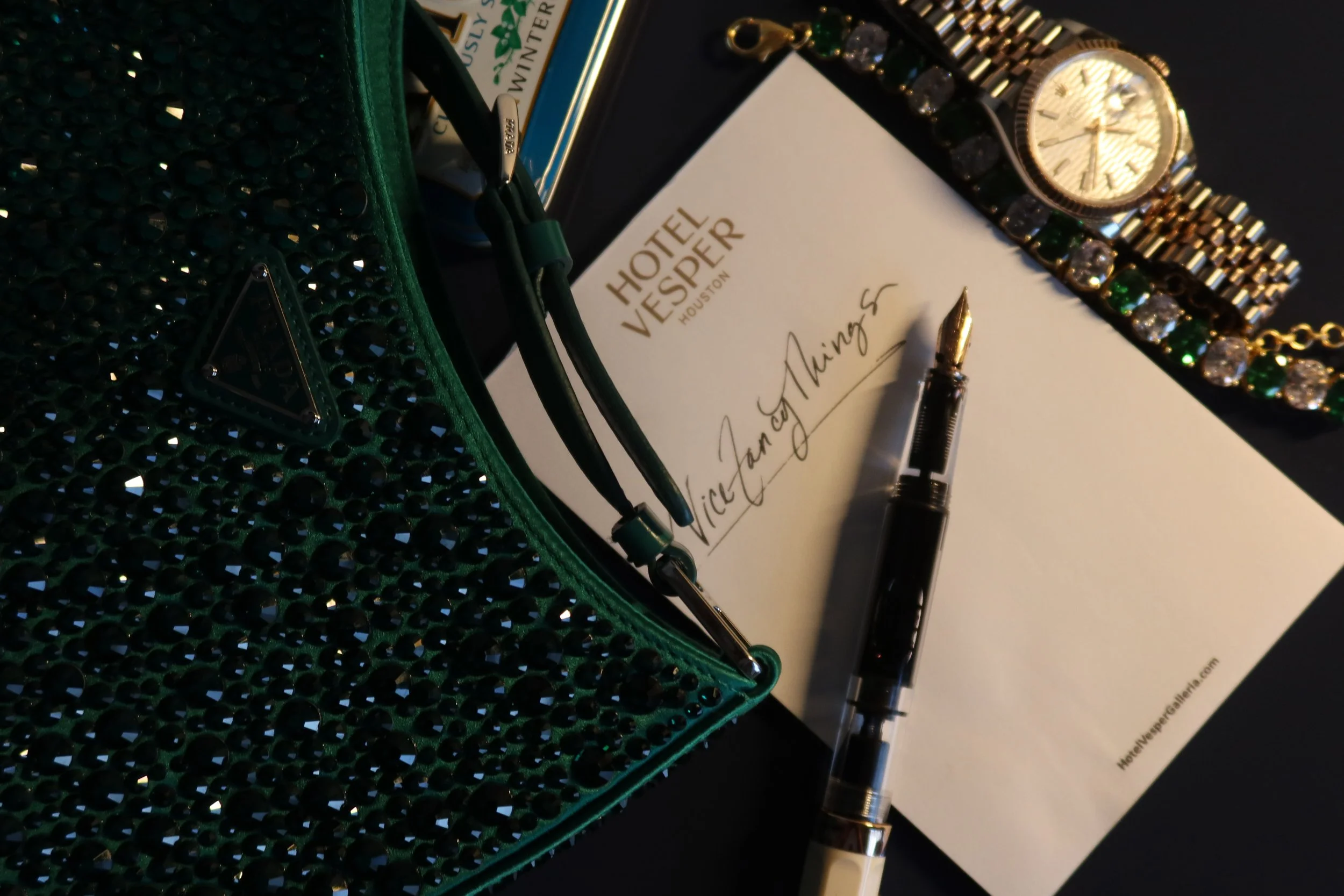
I want to be clear about something: I am not a watch expert.
I am, however, a person who started casually looking at watches about a year ago as a way to dig a little into my husband’s hobby and spend more time with him. I have since memorized what 'lug-to-lug width' means, followed fifty-eleven watch accounts, and once turned a bracelet over at a restaurant to examine the finishing on the links. Alone. At dinner.
So. Not an expert. But definitely not uninvested.
Here's what I've figured out so far — and what I wish someone had told me before I went down this particular rabbit hole.
First: The Terminology Will Feel Like Hazing
Complications. Movements. Case back. Crown. Bezel. Lug width. Bracelet vs. strap. Date window (and the people who have Very Strong Opinions about date windows, they exist).
It's a lot. I'll be honest: the first three nine months I was mostly nodding along and Googling afterward. That's fine. Do that. No one expects you to walk in knowing the difference between ETA and in-house, I promise you - no one.
(For the record: ETA is a Swiss manufacturer that makes movements used by a ton of brands. In-house means the brand made their own. Both can be excellent. Some people care about this distinction like it determines character. I've landed somewhere in the middle.)
What Actually Matters When You're Starting Out
Fit, first. A watch that's too large for your wrist just looks like you borrowed it from someone else. I wear a 6-inch wrist. This has made certain 42mm watches that I loved on display look a little theatrical on me in person. Know your wrist size. Know your lug-to-lug measurement. Don't skip this. Even if you don’t know the actual numbers, Goldilocks it until you find the right one.
Dial legibility. You're going to look at this thing hundreds of times a day. Can you actually read it? Does it make you happy every time you glance down? That matters more than what anyone on a watch forum thinks about your choice.
How it wears. Try it on if you can. Does the weight feel right? Is the bracelet comfortable? Does the clasp cooperate or does it take five minutes every morning? These are not small things.
The Finishing Is Where the Money Actually Goes
Once you understand finishing, you cannot unknow it. And I say this with love: it will ruin cheaper watches for you a little.
Finishing is the detail work — the polished vs. brushed surfaces, the beveled edges, the hand-applied indices. It's what separates a watch that looks good in a photo from one that looks remarkable in person. It is almost entirely invisible unless you're holding it and paying attention.
I pay attention now. This is both a gift and a mild inconvenience.
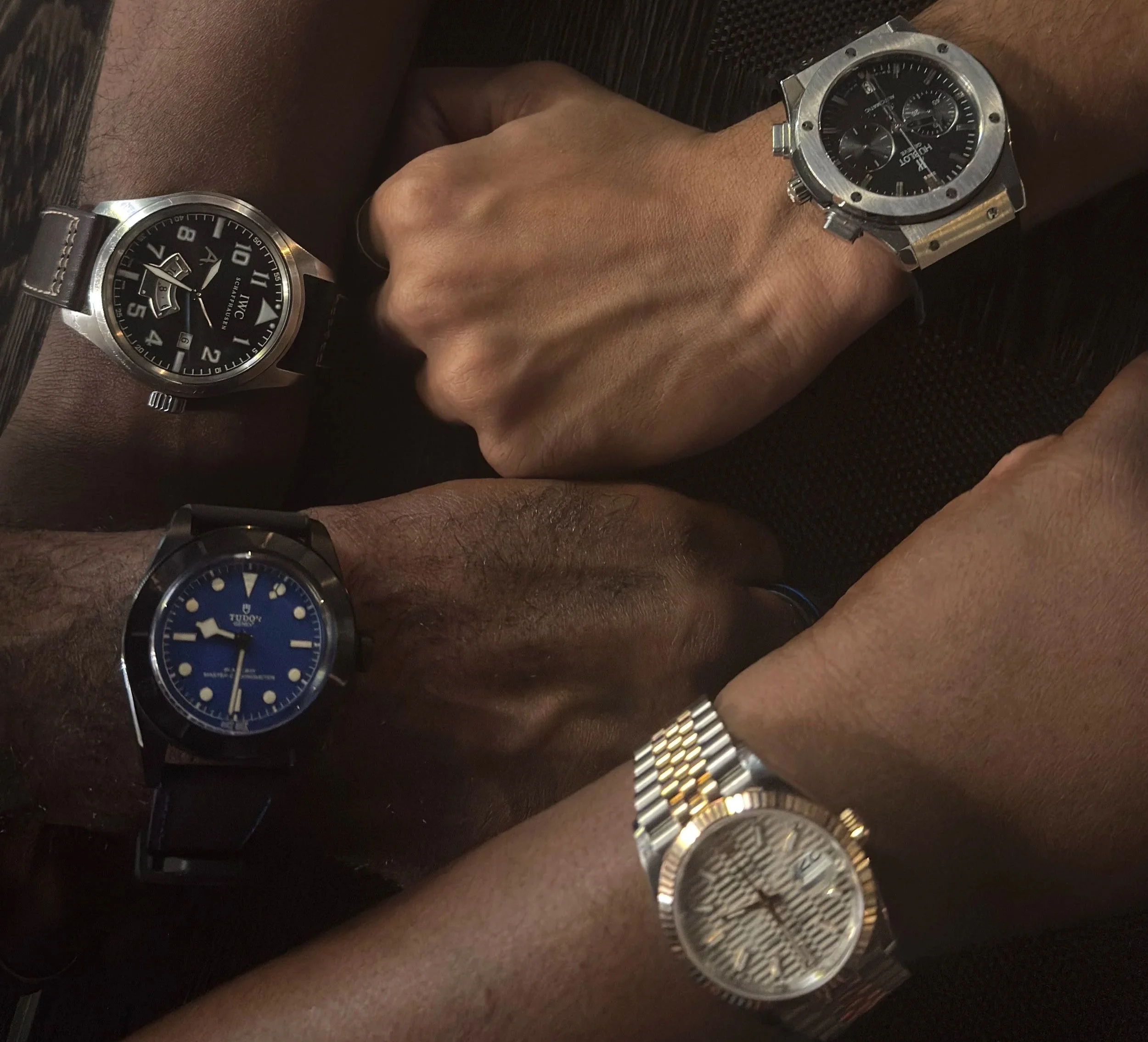
WatchSpotting can be fun once you learn to recognize what you’re look at. Pictured here (top right) Hublot Classic Fusion Chronograph, Rolex Datejust 36 Champagne Motif Dial, Tudor Black Bay Fifty-Eight, and IWC Pilot’s Watch Antoine De Saint-Expupéry.
My Current Thinking on Entry Points
I'm not going to tell you what to buy — I'm a novice, remember, not a buyer's guide. But I'll tell you what's caught my attention as someone who is actively learning: Seiko and Orient for Japanese movements, Tissot and Hamilton for Swiss at accessible price points, and then the whole universe of micro-brands for when you want something more distinctive.
Pre-owned is a completely legitimate path if you do your research. There are excellent communities for this. I've found them helpful, occasionally intense, and mostly kind.
Once you understand finishing, you cannot unknow it. And I say this with love: it will ruin cheaper watches for you a little.
The Part I'm Still Learning
Straps. The world of straps is its own ecosystem and I've only just started poking around the edges. The same watch on a leather strap versus a NATO versus a jubilee bracelet is practically a different object. This is either exciting or overwhelming depending on the day.
Also movements. I'm beginning to understand why people who love horology really love horology — the mechanics of a thing that keeps time without a battery, that can be serviced and worn for decades, is genuinely remarkable. I'm not there yet. But I can feel the gravitational pull.
I'll keep writing about this. There's a recurring series on the Nice Fancy Things Instagram called WatchSpotting — you can find it in my stories and in the highlights — that's my ongoing attempt to document great watches in the wild.
We're learning together. That's the whole point.